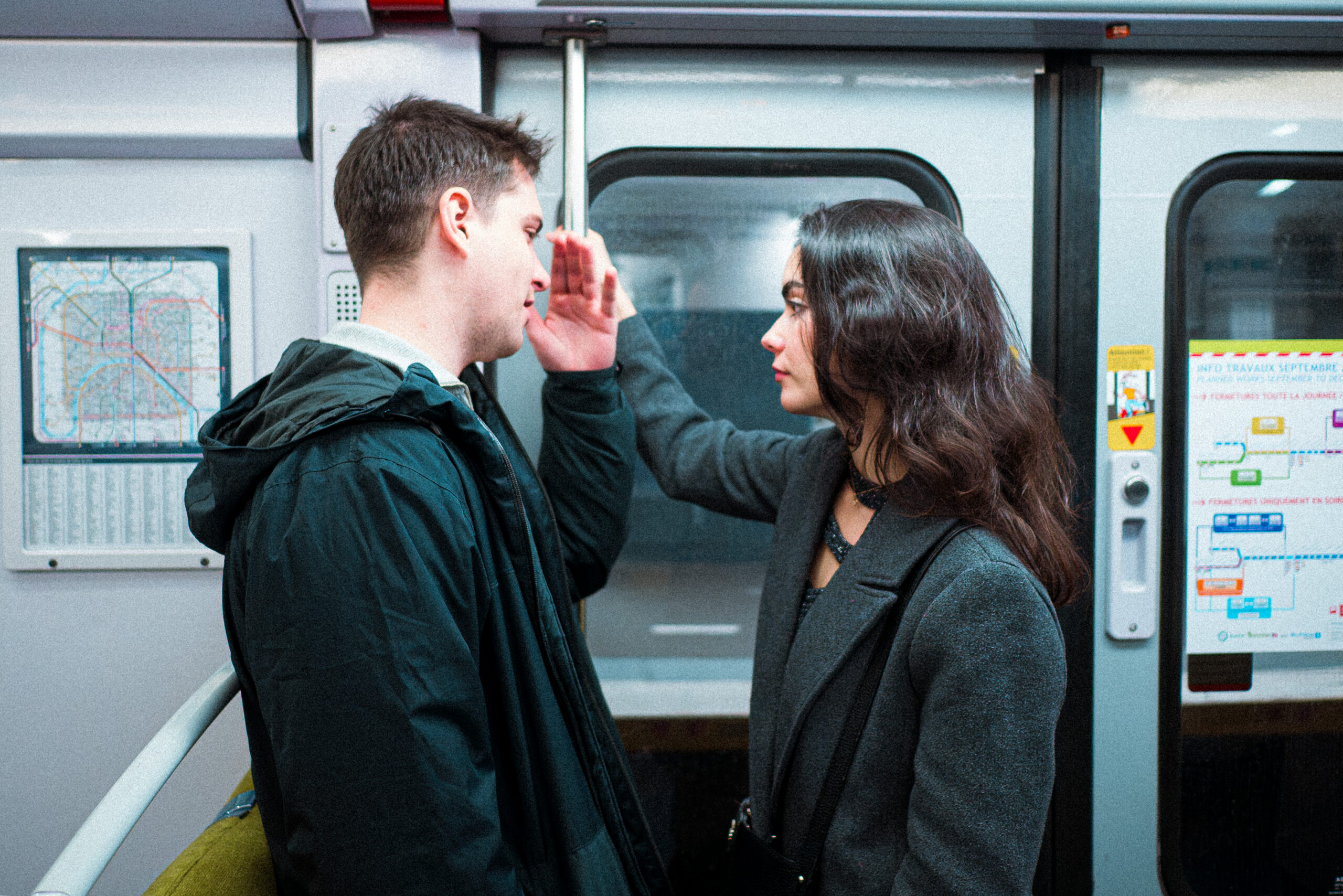
An encounter is not the same as a meeting. A meeting is arranged, expected, accounted for. An encounter happens to you. It arrives without warning and leaves you different from how it found you, and you often do not realize what it was until it is already over.
The moment before
There is a particular quality to the seconds before an encounter — though you cannot feel it at the time because you do not yet know what is coming. You are simply walking, or sitting, or standing in a room, entirely yourself and unaware that you are about to become a slightly different version of yourself. This is what makes encounters impossible to prepare for and very difficult to fully describe afterward. The before and the after exist. The moment of crossing is gone almost as it happens.
People
The most charged encounters are with people. Not relationships — relationships are built slowly and deliberately over time. Encounters are singular. A conversation on a train that lasts two hours and is never continued. A person met at the wrong moment, or the right one. Someone who says a single thing that rearranges something in you quietly and permanently. These encounters do not follow the logic of narrative. They do not build toward anything or resolve into anything. They simply occur, and then they are over, and you carry them.
Duane Michals understood this. His sequences often capture precisely this quality — two figures in proximity, something passing between them, and then separation. He never explains what passed. He cannot. The encounter is the subject and the encounter resists explanation by its nature.
Places
Encounters happen with places too. A city entered for the first time that feels immediately like something — familiar, hostile, alive, dead. A landscape that stops you without warning. A room you walk into and feel immediately that something happened here, though nobody tells you what. Wim Wenders built much of his work around this kind of encounter — his characters move through American landscapes and the landscapes press back, carry weight, mean something beyond what they literally are.
The Texan desert in Paris, Texas is not backdrop. Travis encounters it the way you encounter a person — it reflects something back at him, holds something he needed to find, asks something of him that he cannot fully answer.
Art
To encounter a work of art rather than simply consume it is a specific and relatively rare experience. You can look at a thousand photographs and process them all efficiently and be largely unchanged. And then one stops you. Not necessarily the most technically accomplished or the most obviously beautiful. Something in it catches, the way a splinter catches — small, specific, impossible to ignore. You stand there longer than you planned. You come back to it. You find that it has followed you out of the room.
This is what Michals was reaching for with his sequences and his handwritten text — not the image that is looked at and appreciated but the image that is encountered, that does something to the person standing in front of it.
Lynch and the Encounter with Dread
Lynch’s films are built around encounters with what should not be there. The Mystery Man appearing where he has no right to appear. The Man from Another Place in the Red Room. Frank Booth behind a door in a normal neighborhood. These are encounters in the purest sense — sudden, unexplained, and transforming. Lynch understood that dread works best not as something built slowly but as something that arrives all at once, fully formed, the way the worst encounters do.
What remains
The strange thing about encounters is that they are often more durable than relationships. A relationship can fade, can be revised by later events, can be argued with and reconsidered. An encounter is sealed the moment it ends. It happened exactly as it happened and cannot be renegotiated. The person on the train stays exactly who they were in those two hours. The room stays exactly as it felt when you walked into it. The photograph stays exactly as it stopped you.
This is perhaps why encounters accumulate differently from experiences. They do not form a narrative. They form something more like a collection — discrete, vivid, each one complete in itself.
The most honest lives are probably full of them, unresolved and unfinished, carrying more weight than most of what was planned.